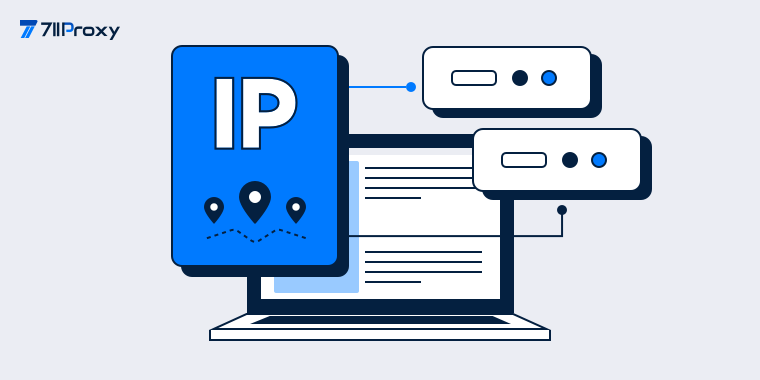
<p style="line-height: 2em;"><span style="color: rgb(15, 17, 21); font-family: quote-cjk-patch, Inter, system-ui, -apple-system, BlinkMacSystemFont, "Segoe UI", Roboto, Oxygen, Ubuntu, Cantarell, "Open Sans", "Helvetica Neue", sans-serif; text-wrap-mode: wrap; background-color: rgb(255, 255, 255);">Static residential proxies and dynamic residential proxies are two main types of residential proxies. Their core distinction lies in the frequency of IP address changes, which directly determines their applicable scenarios and respective advantages and disadvantages. Below, I will explain in detail their differences, their respective strengths, and how to choose between them.</span></p><p><br/></p><p style="line-height: 2em;"><a href="https://www.711proxy.com/static-residential-proxies" target="_blank"><span style="color: rgb(0, 112, 192);"><strong>Advantages of Static Residential Proxies </strong></span></a></p><p style="line-height: 2em;">Session Persistence: The greatest advantage. Ideal for scenarios requiring maintained login states, such as: </p><ul class=" list-paddingleft-2" style="list-style-type: disc;"><li><p style="line-height: 2em;">- Managing multiple social media accounts (e.g., Facebook, Instagram, TikTok shops). </p></li><li><p style="line-height: 2em;">- Playing online games that require a fixed IP address. </p></li><li><p style="line-height: 2em;">- Long-term idle tasks or running automated scripts. </p></li><li><p style="line-height: 2em;">- Accessing accounts with two-factor authentication (2FA). </p></li></ul><p style="line-height: 2em;">Stable Performance: More reliable connections with relatively consistent latency and speed, offering an experience closer to regular home broadband. </p><p style="line-height: 2em;">Ease of Management: Fixed IPs make it easy to set up allowlisting and enforce geographic restrictions (e.g., using an IP from a specific city). </p><p style="line-height: 2em;">Reduced Verification: For certain websites, frequently changing IPs may trigger security checks, which static IPs can help avoid. </p><p><br/></p><p style="line-height: 2em;"><a href="https://www.711proxy.com/residential-proxies-gb" target="_blank" style="color: rgb(0, 112, 192); text-decoration: underline;"><span style="color: rgb(0, 112, 192);"><strong>Advantages of Dynamic Residential Proxies </strong></span></a></p><p style="line-height: 2em;">High Anonymity and Evasion Capability: This is the most prominent advantage. By constantly rotating IPs, network requests appear to come from countless real residential users worldwide, thereby: </p><ul class=" list-paddingleft-2" style="list-style-type: disc;"><li><p style="line-height: 2em;">- Significantly reducing the risk of bans—target websites find it difficult to identify and block crawlers via IPs. </p></li><li><p style="line-height: 2em;">- Bypassing access frequency limits—requests can be distributed across a vast pool of IPs, easily overcoming restrictions like "N requests per hour per IP." </p></li></ul><p style="line-height: 2em;">Powerful Data Collection Capabilities: The preferred choice for web crawling and data scraping. Suitable for: </p><ul class=" list-paddingleft-2" style="list-style-type: disc;"><li><p style="line-height: 2em;">- Large-scale price monitoring (e.g., e-commerce platforms). </p></li><li><p style="line-height: 2em;">- Search engine results page (SERP) scraping. </p></li><li><p style="line-height: 2em;">- Competitor analysis and market research. </p></li><li><p style="line-height: 2em;">- Ad verification. </p></li></ul><p style="line-height: 2em;">Geographic Flexibility: Easily specify or rotate IPs from different countries, cities, or even ISPs to access localized content. </p><p style="line-height: 2em;">Resource Pooling and Cost-Effectiveness: For short-term, high-concurrency tasks, using a shared dynamic IP pool is more economical than exclusive static IPs. </p><p><br/></p><p style="line-height: 2em;"><strong>How to Choose? </strong><strong>Decide based on your specific tasks: </strong></p><p style="line-height: 2em;"><strong>Choose Static Residential Proxies if your tasks involve: </strong></p><ol class=" list-paddingleft-2" style="list-style-type: decimal;"><li><p style="line-height: 2em;"><strong>- Account management: </strong>Operating social media accounts or e-commerce stores (e.g., Amazon, Shopify). </p></li><li><p style="line-height: 2em;"><strong>- Streaming access: R</strong>equiring a fixed regional IP to access content (e.g., Netflix, Hulu).</p></li><li><p style="line-height: 2em;">-<strong> Online gaming: </strong>Avoiding disconnections or bans due to IP changes. </p></li><li><p style="line-height: 2em;">-<strong> Long-term online tasks: </strong>Applications requiring 24/7 connectivity. </p></li></ol><p><br/></p><p style="line-height: 2em;"><strong>Choose Dynamic Residential Proxies if your tasks involve: </strong> </p><ol class=" list-paddingleft-2" style="list-style-type: decimal;"><li><p style="line-height: 2em;"><strong>- Large-scale web scraping: </strong>Collecting product information, flight prices, real estate data, etc. </p></li><li><p style="line-height: 2em;">-<strong> SEO monitoring and ranking tracking:</strong> Checking search rankings from different locations. </p></li><li><p style="line-height: 2em;">-<strong> Bypassing strict anti-bot systems: </strong>Target websites with advanced anti-crawling mechanisms (e.g., Google, Amazon). </p></li><li><p style="line-height: 2em;"><strong>- Anonymous browsing:</strong> Requiring high-level privacy protection. </p></li></ol><p><br/></p><p style="line-height: 2em;"><a href="https://www.711proxy.com" target="_blank" style="text-wrap-mode: nowrap; color: rgb(0, 112, 192); text-decoration: underline;"><strong><span style="text-wrap-mode: nowrap; color: rgb(0, 112, 192);">711Proxy</span></strong></a><strong><span style="text-wrap-mode: nowrap;">Limited time offer</span></strong></p><ul class=" list-paddingleft-2" style="list-style-type: disc;"><li><p style="line-height: 2em;"><strong><span style="text-wrap-mode: nowrap;">- 100M+ Residential Proxies Limited-Time 76% OFF</span></strong></p></li></ul><p style="line-height: 2em;"><strong><span style="text-wrap-mode: nowrap;"> High-Bandwidth Proxies 25% Off </span></strong></p><p style="line-height: 2em;"><strong><span style="text-wrap-mode: nowrap;"> First 5GB for $6</span></strong></p><ul class=" list-paddingleft-2" style="list-style-type: disc;"><li><p style="line-height: 2em;"><strong><span style="text-wrap-mode: nowrap;">- Dedicated Native Static Residential IP </span></strong></p></li></ul><p style="line-height: 2em;"><strong><span style="text-wrap-mode: nowrap;"> Special Offer: $3.5/Month </span></strong></p><p style="line-height: 2em;"><strong><span style="text-wrap-mode: nowrap;"> Enjoy up to 20% off on bulk purchases!</span></strong></p><p style="line-height: 2em;"><strong><span style="text-wrap-mode: nowrap;">Click here to learn more detailed information:<a href="https://www.711proxy.com" target="_blank" style="color: rgb(0, 112, 192); text-decoration: underline;"><span style="text-wrap-mode: nowrap; color: rgb(0, 112, 192);">711proxy.com</span></a></span></strong></p><p><br/></p><p style="line-height: 2em;"><strong>Conclusion </strong></p><p style="line-height: 2em;">The fundamental difference is that static proxies represent "a long-term, unchanging real identity," while dynamic proxies represent "countless short-lived real identities." However, whether static or dynamic, choosing a reputable provider with a clean IP pool (sourced from real users voluntarily and ethically) is crucial. This directly impacts the proxy’s usability, speed, and compliance.</p><p><br/></p>












'%3e%3cg%20id='ic/首页/向上'%20transform='translate(377,%20156)%20scale(1,%20-1)%20rotate(-90)%20translate(-377,%20-156)translate(370,%20149)'%3e%3crect%20id='矩形'%20x='0'%20y='0'%20width='14'%20height='14'%3e%3c/rect%3e%3cpolyline%20id='路径'%20stroke='%23042040'%20transform='translate(7,%207.5)%20scale(1,%20-1)%20translate(-7,%20-7.5)'%20points='12%205%207%2010%202%205'%3e%3c/polyline%3e%3c/g%3e%3c/g%3e%3c/g%3e%3c/svg%3e)