OUR PROXY SERVICES

Residential Proxies-GB
With more than 100 million real residential IPs, unlimited concurrent requests.

Residential Proxies-IP
Large stable residential proxy network, covering 200+ locations.

Unlimited Rotating Proxies
Unlimited rotating residential proxies, eliminating bandwidth costs, suitable for high-usage scenarios.

SOCKS5 Proxies
Fast and reliable proxy network with extensive location coverage and high availability, SOCKS5 refreshed daily.

Static Residential Proxies
Fast and stable ISP proxy network with stability and fast response time.

Mobile Proxies
Real 3G/4G/5G mobile network with clean carrier-grade IPs.
PLAN PRICING
Genuine residential IPs in 200+ countries/ regions, efficient rotation.
Supports custom bandwidth with no traffic or concurrent connection limits.
High- performance IP with 99.9 % uptime, fast and stable.
Real 3G/4G/5G resources, billed by traffic usage, flexible and scalable on demand.
Global real residential IPs with precise targeting.No charge for invalid IPs.
Billed by the number of ports, with rotation intervals from 3 to 30 minutes.

Daily fixed IP limit, reusable within 24 hours.











Wikipedia Scraping: Solve Anti-Scraping & Data Chaos
25/02/2026
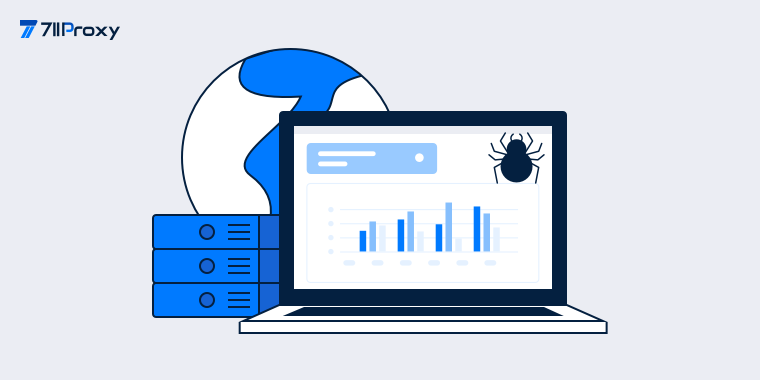
IP proxiesare an indispensable stealth tool for Wikipedia data scraping, offering immense value for training large language models, building knowledge graphs, and conducting academic research. However, when actually starting to scrape, many developers encounter issues such as IP bans, table chaos, and parsing failures.
This article will share practical techniques to solve these core challenges.
Why Scrape Wikipedia Data?
As the world's largest free online encyclopedia, Wikipedia covers accurate information across history, technology, culture, business, and various other fields, with authoritative content that is regularly updated.
Whether for scientific research data investigation, industry report writing, content material accumulation, or product information supplementation, scraping Wikipedia data saves significant time in information gathering and provides reliable data support for work and projects. This is the core reason why it has become the preferred data source for many practitioners.
IP Restrictions: Core Techniques to Bypass Anti-Scraping
Wikipedia has strict anti-scraping mechanisms. Frequent requests from a single IP or excessively fast access speeds can easily be flagged as abnormal operations, resulting in IP bans and failed scraping.
The core technique involves controlling request frequency to simulate real user access patterns and avoid large-scale scraping within a short period. At the same time, pairing this with clean IP proxies allows for dynamic IP switching to bypass anti-scraping restrictions, fundamentally avoiding the risk of IP blacklisting.
Data Chaos: How to Extract Accurately
Wikipedia pages have complex structures mixed with large amounts of redundant information, often leading to issues such as chaotic data scraping, excessive invalid data, and missing data.
It is recommended to clearly define scraping requirements in advance and precisely locate core data fields. Use parsing tools to filter key content and eliminate redundant information. At the same time, ensure stable IP connections to avoid data disorganization caused by connection interruptions, thereby improving scraping efficiency and data purity.
Why Choose 711Proxy?
The success or failure of Wikipedia scraping largely depends on the quality of proxy IPs! 711Proxy has 100 million+ clean and verified IP resources, effectively bypassing Wikipedia's IP blocking mechanisms and is specifically designed for large-scale data scraping.
Additionally, 711Proxy supports rotation/sticky sessions, offering particular advantages for anti-scraping sensitive targets like Wikipedia. With a 99.7% high connection success rate, it maintains stable connections throughout, effectively avoiding scraping interruptions, data loss, and duplicate scraping caused by IP connection failures—significantly improving the completeness and efficiency of Wikipedia data scraping!
Conclusion
The core of Wikipedia data crawling lies in breaking through IP restrictions and extracting data accurately. Choosing a clean and stable proxy IP is the key — with massive high-quality resources and high-performance IPs.
711Proxy helps you collect efficiently and operate stably, making your crawling tasks twice as effective with half the effort.
