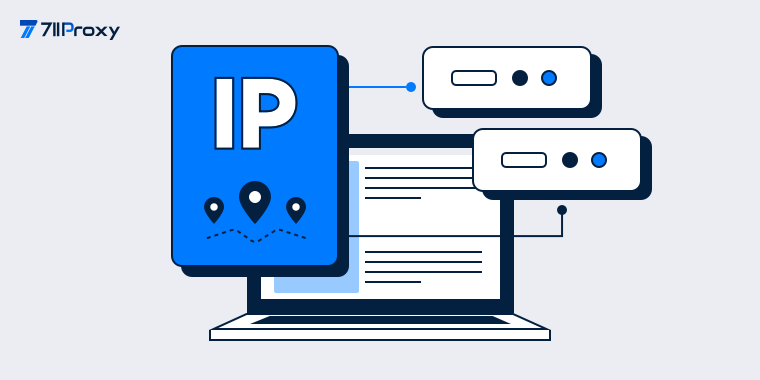
<p style="line-height: 2em;"><span style="font-size: 16px;">In today's increasingly complex network environment, <a href="https://www.711proxy.com/residential-proxies-gb" target="_self" style="color: rgb(0, 176, 240); text-decoration: underline;"><strong><span style="font-size: 16px; color: rgb(0, 176, 240);">proxy IPs</span></strong></a> serve as a fundamental tool for data exchange and business operations, making their security and stability a top priority. For enterprises, selecting the right proxy type and establishing effective risk management mechanisms are essential to ensuring business continuity.</span></p><p style="line-height: 2em;"><span style="font-size: 16px;"> </span></p><p style="line-height: 2em;"><strong><span style="font-size: 24px;">What Is "IP Risk"? What Are Its Main Aspects?</span></strong></p><p style="line-height: 2em;"><span style="font-size: 16px;"> </span></p><p style="line-height: 2em;"><span style="font-size: 16px;">In compliant proxy IP usage scenarios, "<a href="https://www.711proxy.com/residential-proxies-gb" target="_self" style="color: rgb(0, 176, 240); text-decoration: underline;"><strong><span style="font-size: 16px; color: rgb(0, 176, 240);">IP risk</span></strong></a>" refers to potential issues such as connection failures, access restrictions, or data interruptions caused by poor-quality IP addresses or mismatched IP types. Specifically, IP risk manifests in three key dimensions:</span></p><p style="line-height: 2em;"><span style="font-size: 16px;"> </span></p><p style="line-height: 2em;"><strong><span style="font-size: 16px;">· Insufficient IP Purity</span></strong></p><p style="line-height: 2em;"><span style="font-size: 16px;">This refers to whether an IP address has been frequently used for irregular business activities in the past, leading to it being placed on observation lists or low-reputation pools by target platforms. The lower the purity of an IP, the higher the likelihood that normal business requests will be disrupted.</span></p><p style="line-height: 2em;"><span style="font-size: 16px;"> </span></p><p style="line-height: 2em;"><strong><span style="font-size: 16px;">· Low IP Survival Rate</span></strong></p><p style="line-height: 2em;"><span style="font-size: 16px;">This refers to rotating IPs that frequently expire or time out within their valid periods, failing to maintain sufficient availability. A low survival rate directly interrupts continuous business processes, increasing retry costs and time consumption.</span></p><p style="line-height: 2em;"><span style="font-size: 16px;"> </span></p><p style="line-height: 2em;"><strong><span style="font-size: 16px;">· Mismatch Between Business Scenarios and IP Types</span></strong></p><p style="line-height: 2em;"><span style="font-size: 16px;">This occurs when the selected IP type (rotating or static) does not align with actual business rhythms. For example, using a high-frequency rotating IP for scenarios that require long-term session persistence may trigger behavioral verification mechanisms on target platforms, resulting in unnecessary business interruptions.</span></p><p style="line-height: 2em;"><span style="font-size: 16px;"> </span></p><p style="line-height: 2em;"><strong><span style="font-size: 24px;">Rotating IP vs. Static IP: Key Differences</span></strong></p><p style="line-height: 2em;"><span style="font-size: 16px;"> </span></p><p style="line-height: 2em;"><span style="font-size: 16px;">A rotating IP automatically switches addresses at fixed time intervals or with each request, while a static IP remains fixed and dedicated over the long term. The logic behind choosing between them is fundamentally different.</span></p><p style="line-height: 2em;"><span style="font-size: 16px;"> </span></p><p style="line-height: 2em;"><a href="https://www.711proxy.com/residential-proxies-gb" target="_self" style="color: rgb(0, 176, 240); text-decoration: underline;"><span style="color: rgb(0, 176, 240);"><strong><span style="color: rgb(0, 176, 240); font-size: 20px;">Rotating IP</span></strong></span></a><strong><span style="font-size: 20px;">: The Choice for High-Concurrency Scenarios</span></strong></p><p style="line-height: 2em;"><span style="font-size: 16px;">Rotating IPs, with their flexible IP rotation mechanisms and large IP pools, are well-suited for high-frequency access scenarios such as public data collection and price monitoring. In daily use, setting reasonable rotation intervals and controlling request frequency can effectively distribute access pressure across individual IPs, thereby reducing IP risk.</span></p><p style="line-height: 2em;"><span style="font-size: 16px;"> </span></p><p style="line-height: 2em;"><span style="font-size: 16px;">711Proxy's Rotating IP Pool offers 100M+ real residential IPs covering over 200 regions worldwide. These purified and verified IP resources boast a success rate of up to 99.7% and support unlimited concurrent requests, minimizing business disruptions caused by IP failures or excessive reuse from the very start.</span></p><p style="line-height: 2em;"><span style="font-size: 16px;"> </span></p><p style="line-height: 2em;"><a href="https://www.711proxy.com/static-residential-proxies" target="_self" style="color: rgb(0, 176, 240); text-decoration: underline;"><span style="color: rgb(0, 176, 240);"><strong><span style="color: rgb(0, 176, 240); font-size: 20px;">Static IP</span></strong></span></a><strong><span style="font-size: 20px;">: The Solution for Long-Term Operations</span></strong></p><p style="line-height: 2em;"><span style="font-size: 16px;">The advantage of static IPs lies in their fixed, long-term stability, making them the preferred choice for extended store management, advertising campaigns, and brand monitoring.</span></p><p style="line-height: 2em;"><span style="font-size: 16px;"> </span></p><p style="line-height: 2em;"><span style="font-size: 16px;">711Proxy's Static Proxy Service offers unlimited traffic throughout the rental period, with each IP exclusively dedicated to a single user. This effectively eliminates the interference risks associated with multi-user sharing, providing sustained and stable network support for long-term business operations.</span></p><p style="line-height: 2em;"><span style="font-size: 16px;"> </span></p><p style="line-height: 2em;"><strong><span style="font-size: 24px;">Practical Tips for Reducing IP Risk</span></strong></p><p style="line-height: 2em;"><span style="font-size: 16px;"> </span></p><p style="line-height: 2em;"><span style="font-size: 16px;">① Keep accounts and IPs aligned, use separate IP resources for different business accounts to avoid cross-association.</span></p><p style="line-height: 2em;"><span style="font-size: 16px;">② Keep request frequencies consistent with typical access behavior, and avoid sending dense bursts of requests over short periods.</span></p><p style="line-height: 2em;"><span style="font-size: 16px;">③ Regularly check IP reputation status and promptly replace any IPs flagged with risk indicators.</span></p><p style="line-height: 2em;"><span style="font-size: 16px;">④ Match IP types to business needs, choose static for long-term operations and rotating for short-term data collection.</span></p><p style="line-height: 2em;"><span style="font-size: 16px;"> </span></p><p style="line-height: 2em;"><strong><span style="font-size: 24px;">Conclusion</span></strong></p><p style="line-height: 2em;"><span style="font-size: 16px;"> </span></p><p style="line-height: 2em;"><span style="font-size: 16px;">When selecting proxy IPs, it is advisable to follow the principle of "evaluate first, purchase second."</span></p><p style="line-height: 2em;"><strong><span style="font-size: 16px;">First</span></strong><span style="font-size: 16px;">, assess your business's dependency on IP stability.</span></p><p style="line-height: 2em;"><strong><span style="font-size: 16px;">Second</span></strong><span style="font-size: 16px;">, verify whether the service provider offers IP history query features to proactively avoid addresses that have already been flagged.</span></p><p style="line-height: 2em;"><strong><span style="font-size: 16px;">Finally</span></strong><span style="font-size: 16px;">, avoid binding all business traffic to a single IP; instead, implement tiered isolation based on business criticality.</span></p><p style="line-height: 2em;"><span style="font-size: 16px;"> </span></p><p style="line-height: 2em;"><a href="https://www.711proxy.com/pricing/regular/residential-proxies-gb" target="_self" style="font-size: 16px; color: rgb(0, 176, 240); text-decoration: underline;"><strong><span style="font-size: 16px; color: rgb(0, 176, 240);">711Proxy</span></strong></a><span style="font-size: 16px;">, with its billion-level purified IP pool and comprehensive service offerings, covers a wide range of scenarios, from high-frequency data collection to long-term operational stability. It empowers enterprises to reduce IP risks while staying focused on driving core business efficiency and long-term success.</span></p><p><br/></p>












'%3e%3cg%20id='ic/首页/向上'%20transform='translate(377,%20156)%20scale(1,%20-1)%20rotate(-90)%20translate(-377,%20-156)translate(370,%20149)'%3e%3crect%20id='矩形'%20x='0'%20y='0'%20width='14'%20height='14'%3e%3c/rect%3e%3cpolyline%20id='路径'%20stroke='%23042040'%20transform='translate(7,%207.5)%20scale(1,%20-1)%20translate(-7,%20-7.5)'%20points='12%205%207%2010%202%205'%3e%3c/polyline%3e%3c/g%3e%3c/g%3e%3c/g%3e%3c/svg%3e)