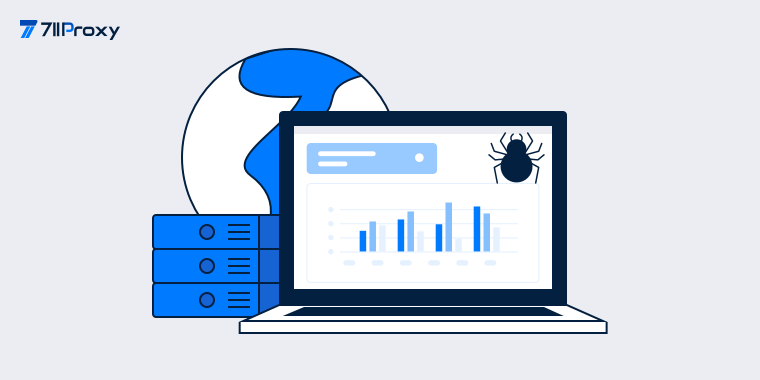
<p style="line-height: 2em;"><span style="font-size: 16px;">Collecting public web data is routine work for many teams now. Blocks rarely show up on day one. The job runs smoothly for a while, then the failure rate creeps up. Once a run breaks, the data already collected has to be redone and the schedule slips with it. This article covers where the block actually happens, then what residential proxies bring to each of those layers.</span></p><p style="line-height: 2em;"><span style="font-size: 16px;"><br/></span></p><p style="line-height: 2em;"><span style="font-size: 24px;"><strong>Where Scraping Jobs Get Stuck</strong></span></p><p style="line-height: 2em;"><span style="font-size: 16px;"><br/></span></p><p style="line-height: 2em;"><span style="font-size: 16px;">When a site decides whether a batch of requests looks normal, the IP is only one input. How many requests arrive from one source at the same time, how evenly they are spaced, and whether the source type matches the other visitors all get weighed together.</span></p><p style="line-height: 2em;"><span style="font-size: 16px;">Blocks tend to show up in three shapes. One job starts failing heavily after a certain volume, with the first few hundred rows returning fine. Another is refused on the very first request. The third opens the page but returns fewer fields than a normal visit would.</span></p><p style="line-height: 2em;"><span style="font-size: 16px;"><br/></span></p><p style="line-height: 2em;"><span style="font-size: 24px;"><strong>Three Layers Where 711Proxy Helps Collection Tasks</strong></span></p><p style="line-height: 2em;"><span style="font-size: 16px;"><br/></span></p><p style="line-height: 2em;"><span style="font-size: 16px;">711Proxy sources residential IPs from real home networks, with a pool of over 100 million addresses across 200+ countries and regions. That resource applies at three separate layers.</span></p><p style="line-height: 2em;"><span style="font-size: 16px;">1. The source layer. Thin sourcing is the most common cause of a stalled run.<a href="https://www.711proxy.com/global-residential-proxy-locations" target="_blank" style="color: rgb(0, 176, 240); text-decoration: underline;"><span style="font-size: 16px; color: rgb(0, 176, 240);"><strong>The residential pool</strong></span></a> supports rotation and also targeting at both the city and state level, so teams collecting by market can send every request from the market itself.</span></p><p style="line-height: 2em;"><span style="font-size: 16px;">2. The pacing layer. Session control is adjustable, so a job can switch IPs on every request or hold one address for a stretch of time. Long single runs work better on the latter, which keeps the run unbroken and preserves the signed-in state.</span></p><p style="line-height: 2em;"><span style="font-size: 16px;">3. The efficiency layer. Residential Proxies-GB place no cap on concurrency and support both HTTP and SOCKS5. Common scraping frameworks connect directly, so throughput stops being limited by connection count once volume picks up.</span></p><p style="line-height: 2em;"><span style="font-size: 16px;"><br/></span></p><p style="line-height: 2em;"><span style="font-size: 24px;"><strong>What Backs These Three Layers</strong></span></p><p style="line-height: 2em;"><span style="font-size: 16px;"><br/></span></p><p style="line-height: 2em;"><span style="font-size: 16px;">Pool size is the starting point, but collection work cares more about whether the resource holds up over time. The 711Proxy pool refreshes daily, sources are verified, and transfer speed and connection stability stay at a high level. On a run that lasts several hours, an IP change mid-task often costs more than a little extra traffic.</span></p><p style="line-height: 2em;"><span style="font-size: 16px;">The product lines are separated by workload shape as well. <a href="https://www.711proxy.com/residential-proxies-gb" target="_blank" style="color: rgb(0, 176, 240); text-decoration: underline;"><span style="font-size: 16px; color: rgb(0, 176, 240);"><strong>Residential Proxies-GB</strong></span></a> bill by traffic and suit bulk collection. Static Residential Proxies fit cases that need one consistent source over a long period, and Mobile Proxies cover targets that involve mobile networks.</span></p><p style="line-height: 2em;"><span style="font-size: 16px;">Access and operations shape long-run cost too. The platform offers API access and a visual dashboard, with authentication by username and password or IP whitelist. Teams can allocate resources through CDKey, and configuration or debugging questions get answered online by a support team.</span></p><p style="line-height: 2em;"><span style="font-size: 16px;"><br/></span></p><p style="line-height: 2em;"><span style="font-size: 24px;"><strong>Summary</strong></span></p><p style="line-height: 2em;"><span style="font-size: 24px;"><strong><br/></strong></span></p><p style="line-height: 2em;"><span style="font-size: 16px;">Long-term collection stability depends on the source layer and the pacing layer holding up at the same time. When bulk failures return, the first step is to see which layer is failing before deciding whether to adjust the request pattern or add IP resources. Residential proxies from 711Proxy can be configured at each of these layers, which leaves teams more room to focus on the data itself.</span></p><p><br/></p>












'%3e%3cg%20id='ic/首页/向上'%20transform='translate(377,%20156)%20scale(1,%20-1)%20rotate(-90)%20translate(-377,%20-156)translate(370,%20149)'%3e%3crect%20id='矩形'%20x='0'%20y='0'%20width='14'%20height='14'%3e%3c/rect%3e%3cpolyline%20id='路径'%20stroke='%23042040'%20transform='translate(7,%207.5)%20scale(1,%20-1)%20translate(-7,%20-7.5)'%20points='12%205%207%2010%202%205'%3e%3c/polyline%3e%3c/g%3e%3c/g%3e%3c/g%3e%3c/svg%3e)