DỊCH VỤ PROXY CỦA CHÚNG TÔI

Proxy cư dân-GB
Với hơn 100 triệu IP dân cư thực, yêu cầu đồng thời không giới hạn.

Proxy cư dân-IP
Mạng proxy dân cư ổn định lớn, phủ sóng hơn 200 địa điểm.

Proxy luân phiên không giới hạn
Proxy dân cư luân phiên không giới hạn, loại bỏ chi phí băng thông, phù hợp cho các tình huống sử dụng nhiều.

Proxy SOCKS5
Mạng proxy nhanh và đáng tin cậy với phạm vi địa điểm rộng và khả dụng cao, SOCKS5 được làm mới hàng ngày.

Proxy dân cư tĩnh
Mạng proxy ISP nhanh và ổn định với độ ổn định và thời gian phản hồi nhanh.

Переместить прокси
Реальные мобильные сети 3G / 4G / 5G, чистый оператор IP.
Giá gói
IP dân cư thực tại 200+ quốc gia/khu vực, luân phiên hiệu quả.
Hỗ trợ băng thông tùy chỉnh, không giới hạn lưu lượng và kết nối đồng thời.
IP hiệu suất cao với thời gian hoạt động 99,9%, nhanh và ổn định.
Реальный ресурс 3G / 4G / 5G, используемый по потоку, с расширением.
IP dân cư thực toàn cầu với nhắm mục tiêu chính xác. Không tính phí cho IP không hợp lệ.
Thanh toán theo số lượng cổng, với khoảng thời gian luân phiên từ 3 đến 30 phút.

Giới hạn IP cố định hàng ngày, có thể sử dụng lại trong vòng 24 giờ.











Why Gemini Blocks Data Center IPs: An In-Depth Analysis
20/03/2026
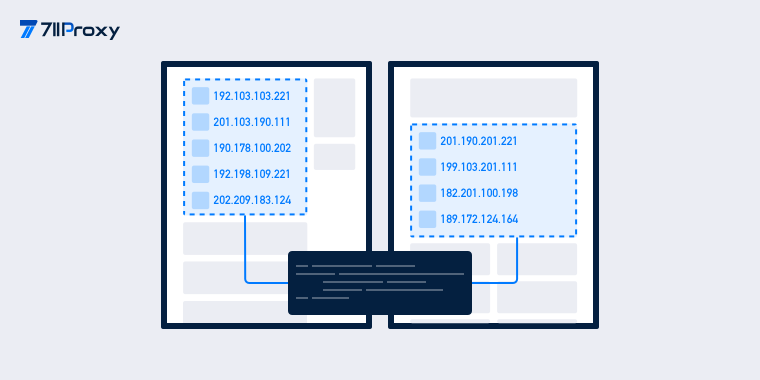
IP proxies are essential tools for connecting to global networks. However, with the comprehensive upgrade of security systems on AI platforms like Google Gemini, many users find that using data center IPs to access Gemini frequently results in 403 Forbidden errors.
This article delves into the technical reasons behind Gemini's blocking of data center IPs and explores how to build a trusted AI access environment through 711Proxy's residential IP solutions.
ASN Identity Recognition
The core reason Gemini blocks data center IPs lies in ASN (Autonomous System Number) identity recognition. At the network protocol level, ASN serves as the unique identifier for network operators. Once the ASN reveals that an IP originates from data centers like AWS (AS16509) or GCP, Google's security policies immediately flag it as high-risk, assuming the traffic may come from crawlers or malicious automated scripts.
In stark contrast, residential IPs are registered as "ISP" type in ASN databases, belonging to major telecom providers like Comcast (AS7922) and AT&T (AS7018). These IPs naturally enjoy a high initial trust score within the Gemini system, ensuring smooth and stable access.
Fraud Scoring Mechanism
By 2026, Google's platform has introduced a rotating evaluation mechanism called "Fraud Score." If an IP address is identified as originating from traditional data centers, its initial score is extremely high, causing users to frequently encounter "Access Denied" or 403 Forbidden errors even when connections are established.
More critically, parameters such as MTU values and TCP window sizes of data center IPs are typically optimized for servers, which significantly differ from the network protocol stack characteristics of ordinary home devices, making them easily flagged by Gemini's Deep Packet Inspection (DPI).
Device Fingerprint and Geolocation
Entering 2026, Google's fingerprint tracking technology has undergone a paradigm shift. When accessing Gemini, the system concurrently collects multidimensional data including Canvas fingerprint, WebGL rendering details, timezone, battery status, and WebRTC local IPs. This fingerprint information must strictly match the geographical metadata provided by the IP address.
What Gemini verifies is environmental consistency, not merely IP geolocation. This is the fundamental reason why simply changing data center IPs cannot solve the problem.
711Proxy: Building a Trusted AI Access Environment
Facing such a sophisticated composite defense system from Gemini, why is 711Proxy the better choice?
Compliant IP Resources
711Proxy owns over 100 million residential IPs globally, covering more than 200 countries and regions. Each IP comes from legitimate Internet Service Providers (ISPs) with no pollution or abuse records.
Stable Technical Support
711Proxy supports unlimited concurrent requests, equipped with a 99.7% connection success rate and ultra-low latency below 0.3 seconds. From cross-border AI interactions to multi-task concurrency, it ensures smooth, lag-free operations throughout.
Comprehensive Service Types
Addressing the diverse needs of different users, 711Proxy offers various service types including dynamic (GB/IP), static, unlimited (high bandwidth/port), and SOCKS5, while supporting personalized customization services that perfectly adapt to multiple scenarios.
24/7 Customer Service Online
711Proxy is equipped with a professional 24/7 customer service team. From product selection consultation and technical fault troubleshooting to account management and usage guidance, the professional customer service team provides full-time accompaniment, ensuring that every problem is responded to, followed up on, and resolved.
Conclusion
The interception of data center IPs by Gemini is essentially an instinctive rejection of "server identity" by Google's security system. Against the backdrop of the comprehensive upgrade of AI platform defense architectures in 2026, residential IPs have evolved from an "optional choice" to a "must-have".
For users with cross-border AI interaction and data collection needs, 711Proxy, which balances efficiency and compliance, is a better choice.
