DỊCH VỤ PROXY CỦA CHÚNG TÔI

Proxy cư dân-GB
Với hơn 100 triệu IP dân cư thực, yêu cầu đồng thời không giới hạn.

Proxy cư dân-IP
Mạng proxy dân cư ổn định lớn, phủ sóng hơn 200 địa điểm.

Proxy luân phiên không giới hạn
Proxy dân cư luân phiên không giới hạn, loại bỏ chi phí băng thông, phù hợp cho các tình huống sử dụng nhiều.

Proxy SOCKS5
Mạng proxy nhanh và đáng tin cậy với phạm vi địa điểm rộng và khả dụng cao, SOCKS5 được làm mới hàng ngày.

Proxy dân cư tĩnh
Mạng proxy ISP nhanh và ổn định với độ ổn định và thời gian phản hồi nhanh.

Переместить прокси
Реальные мобильные сети 3G / 4G / 5G, чистый оператор IP.
Giá gói
IP dân cư thực tại 200+ quốc gia/khu vực, luân phiên hiệu quả.
Hỗ trợ băng thông tùy chỉnh, không giới hạn lưu lượng và kết nối đồng thời.
IP hiệu suất cao với thời gian hoạt động 99,9%, nhanh và ổn định.
Реальный ресурс 3G / 4G / 5G, используемый по потоку, с расширением.
IP dân cư thực toàn cầu với nhắm mục tiêu chính xác. Không tính phí cho IP không hợp lệ.
Thanh toán theo số lượng cổng, với khoảng thời gian luân phiên từ 3 đến 30 phút.

Giới hạn IP cố định hàng ngày, có thể sử dụng lại trong vòng 24 giờ.











Complete Guide to E-commerce Data Scraping
16/06/2026
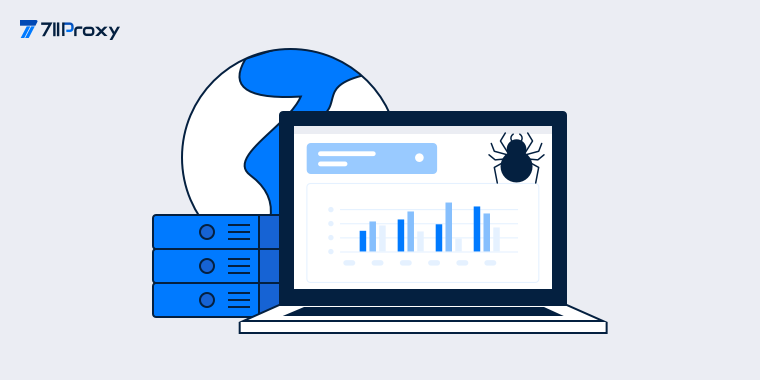
E-commerce public product data is a valuable resource for businesses conducting competitive analysis and pricing research. Standardized data scraping provides essential support for business decision-making. In this article, 711Proxy outlines the complete process from tool selection to compliant operations, helping you establish a secure and efficient data scraping system.
Common Operational Challenges
When conducting automated e-commerce data collection, platform risk control systems often impose access restrictions. The most frequently encountered operational challenges include:
IP Access Restrictions: When a large number of requests are sent from the same IP address in a short period, the website's firewall triggers protection mechanisms, temporarily or permanently blocking that IP and interrupting the scraping task.
Request Rate Limiting: Some e-commerce platforms set thresholds for the number of requests allowed per unit of time. Exceeding these limits results in error pages or verification challenges.
CAPTCHA Challenges: When request patterns show regular characteristics (such as fixed time intervals or fixed request paths), the website may present CAPTCHAs to distinguish bots from humans, affecting the continuity of automated scraping.
These issues stem from standard traffic management strategies employed by websites and need to be addressed through reasonable technical solutions.
How to Choose the Right Scraping Tool
Faced with the challenges mentioned above, some users opt for low-cost proxy services. However, cheap proxies often have drawbacks such as unpredictable IP quality, poor node stability, and small available IP pools. Some of these IPs may even have been already blacklisted by e-commerce platforms. As a result, rather than alleviating access restrictions, they can further reduce scraping efficiency due to frequent timeouts or interruptions.
In contrast, 711Proxy's Rotating Residential Proxies offer a more reliable solution:
· 100M+ clean and verified IP resources, covering over 200 countries/regions
· 99.7% connection success rate & latency <0.3 seconds
· Support for rotating/sticky sessions and unlimited concurrent requests
Our solution not only effectively mitigates common issues like IP access restrictions and request rate limiting but also provides reliable support for high-concurrency, high-stability scraping tasks. This helps ensure that e-commerce scraping operations, such as product price monitoring, competitive analysis, and inventory tracking, proceed smoothly within a compliant framework.
Compliance Essentials for E-commerce Data Scraping
Data scraping must be conducted within the boundaries of the law and platform rules.
First: Before scraping, check the target website's robots.txt file to understand which directories are permitted to be scraped.
Second: Strictly comply with relevant local data security regulations. Do not collect personal private information or non-public commercial data.
Additionally: During the scraping process, it is recommended to set reasonable request intervals to avoid impacting the normal operation of the target website due to high-frequency access.
Compliance is not a constraint on technology; it is the foundation for ensuring that data scraping activities can be sustained over the long term. Only by operating within the rules can you balance business needs with legal risk management.
Full-Process Recommendations for Efficient Scraping
Data scraping itself is a neutral technical capability, and its value depends entirely on whether it is used in a compliant manner. Only by respecting website rules and adhering to relevant laws and regulations, while reasonably combining technical tools and proxy resources, can you achieve continuous and stable data support for e-commerce data analysis.
