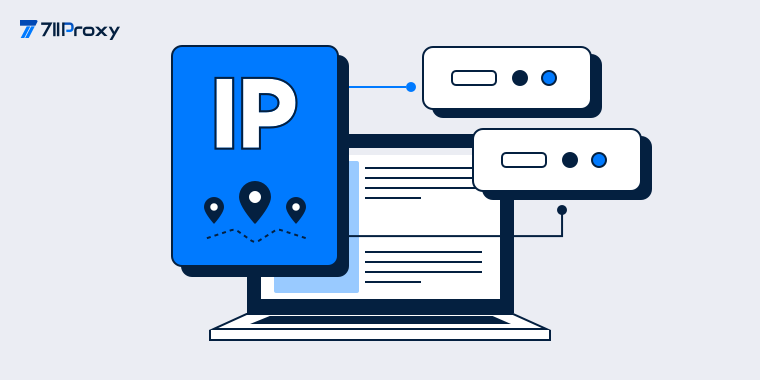
<p style="line-height: 2em;"><span style="font-size: 16px;">An IP proxy is a service that routes internet requests through an intermediary server. Instead of connecting directly to a destination website, a user’s browser or application sends requests through a proxy server, which forwards them to the destination. When configured correctly, the destination generally sees the proxy’s outgoing IP address rather than the user’s original public IP address.</span></p><p style="line-height: 2em;"><span style="font-size: 16px;">IP proxies support a variety of online activities, including regional website testing, public web data collection, e-commerce price monitoring, market research, advertising verification, and business operations that require different network locations.</span></p><p style="line-height: 2em;"><span style="font-size: 16px;">Different proxy types serve different purposes. Residential proxies use IP addresses associated with residential internet connections. Static residential proxies provide a more consistent IP address, while rotating residential proxies change outgoing IPs according to configured rules. Mobile proxies use IP addresses associated with cellular networks, and <a href="https://www.711proxy.com/zh-TW/socks5-proxies" target="_self" style="color: rgb(0, 176, 240); text-decoration: underline;"><span style="font-size: 16px; color: rgb(0, 176, 240);">SOCKS5</span></a> proxies provide a protocol-based option for compatible applications.</span></p><p style="line-height: 2em;"><span style="font-size: 16px;">Choosing the right IP proxy depends on your target locations, session requirements, traffic volume, connection reliability, technical setup, and budget. This guide explains how IP proxies work, introduces their main types, explores practical applications, and provides a checklist for selecting a suitable proxy solution.</span></p><p style="line-height: 2em;"><span style="font-size: 16px;"><br/></span></p><h2 style="line-height: 2em;"><span style="font-size: 16px;"> <strong><span style="font-size: 24px;">What Is an IP Proxy?</span></strong></span></h2><p><span style="font-size: 16px;"><strong><span style="font-size: 24px;"><br/></span></strong></span></p><p style="line-height: 2em;"><span style="font-size: 16px;">An IP proxy, also known as a proxy IP or IP proxy service, acts as an intermediary between your device or application and a destination website.</span></p><p style="line-height: 2em;"><span style="font-size: 16px;">When you visit a website without a proxy, your request typically travels through your internet connection to the destination. The website can observe your public IP address, along with other information available from your connection and browser request.</span></p><p style="line-height: 2em;"><span style="font-size: 16px;">With an IP proxy, your request first travels to a proxy server. The server forwards the request to the destination and relays the response back to you. In a typical configuration, the destination sees the proxy’s outgoing IP address instead of your original public IP address.</span></p><p style="line-height: 2em;"><span style="font-size: 16px;">For example, imagine that an online retailer wants to check how a product page appears to customers in the United States, the United Kingdom, and Japan. By using proxies associated with the relevant locations, the retailer can send requests from different regional network endpoints and compare displayed prices, language settings, shipping information, and promotional content.</span></p><p style="line-height: 2em;"><span style="font-size: 16px;">This capability can be particularly useful for businesses that operate across multiple markets and need consistent information about their regional online presence.</span></p><p style="line-height: 2em;"><span style="font-size: 16px;">However, an IP proxy does not guarantee complete anonymity. Websites may also use cookies, account information, browser fingerprints, and behavioral signals to recognize or associate sessions. A proxy changes the network route and visible IP address, but it does not eliminate every form of online tracking.</span></p><p style="line-height: 2em;"><span style="font-size: 16px;"><br/></span></p><h2 style="line-height: 2em;"><span style="font-size: 24px;"><strong>How Does an IP Proxy Work?</strong></span></h2><p><span style="font-size: 24px;"><strong><br/></strong></span></p><p style="line-height: 2em;"><strong><span style="font-size: 16px;">An IP proxy connection typically involves three components:</span></strong></p><p style="line-height: 2em;"><span style="font-size: 16px;">· Client: The browser, application, or automated tool that generates the request.</span></p><p style="line-height: 2em;"><span style="font-size: 16px;">· Proxy server: The intermediary that receives and forwards the request.</span></p><p style="line-height: 2em;"><span style="font-size: 16px;">· Destination server: The website or online service being accessed.</span></p><p style="line-height: 2em;"><span style="font-size: 16px;"><br/></span></p><p style="line-height: 2em;"><span style="font-size: 16px;"><strong>The process generally follows four steps:</strong></span></p><h3 style="line-height: 2em;"><span style="font-size: 16px;">Step 1: The Client Sends a Request</span></h3><p style="line-height: 2em;"><span style="font-size: 16px;">A browser or application generates a request to access a website. When a proxy is configured, the request is directed to the selected proxy endpoint.</span></p><h3 style="line-height: 2em;"><span style="font-size: 16px;">Step 2: The Proxy Forwards the Request</span></h3><p style="line-height: 2em;"><span style="font-size: 16px;">The proxy server receives the request and forwards it according to the service configuration. Depending on the plan, the outgoing connection may use a particular IP address, geographic location, or session setting.</span></p><h3 style="line-height: 2em;"><span style="font-size: 16px;">Step 3: The Destination Processes the Request</span></h3><p style="line-height: 2em;"><span style="font-size: 16px;">The destination website receives the request and returns the relevant content. It can generally observe the proxy’s outgoing IP address, although other request details may reveal additional information.</span></p><h3 style="line-height: 2em;"><span style="font-size: 16px;">Step 4: The Proxy Returns the Response</span></h3><p style="line-height: 2em;"><span style="font-size: 16px;">The proxy relays the destination’s response to the client. The browser displays the webpage, or an application processes the returned data.</span></p><p style="line-height: 2em;"><span style="font-size: 16px;"><br/></span></p><p style="line-height: 2em;"><strong><span style="font-size: 16px;">The basic flow is:</span></strong></p><p style="line-height: 2em;"><span style="font-size: 16px;">Your Device → IP Proxy → Destination Website → IP Proxy → Your Device</span></p><p style="line-height: 2em;"><span style="font-size: 16px;">The precise behavior depends on the proxy protocol, authentication, session settings, and application configuration.</span></p><p style="line-height: 2em;"><span style="font-size: 16px;"><br/></span></p><h3 style="line-height: 2em;"><span style="font-size: 20px;"><strong>What Is IP Rotation?</strong></span></h3><p><span style="font-size: 20px;"><strong><br/></strong></span></p><p style="line-height: 2em;"><span style="font-size: 16px;">IP rotation means changing the outgoing IP address according to predefined rules.</span></p><p style="line-height: 2em;"><span style="font-size: 16px;">Depending on the service, an IP may change with each request, after a specified interval, or when a new session begins. This approach can help distribute requests across multiple IP addresses in suitable data collection workflows.</span></p><p style="line-height: 2em;"><span style="font-size: 16px;">Some proxy services also support sticky sessions, which maintain the same IP for a defined period. Sticky sessions are useful when an application needs continuity across multiple requests.</span></p><p style="line-height: 2em;"><span style="font-size: 16px;">Neither approach is universally better. Rotating IPs can be suitable for distributed public data collection, while a consistent IP may be more appropriate for workflows that depend on a continuous session.</span></p><p style="line-height: 2em;"><span style="font-size: 16px;"><br/></span></p><h2 style="line-height: 2em;"><strong><span style="font-size: 24px;">What Are the Main Types of IP Proxies?</span></strong></h2><p><span style="font-size: 24px;"><br/></span></p><p style="line-height: 2em;"><span style="font-size: 16px;">Proxy services can be classified by IP source, session behavior, or supported protocol. Understanding these categories helps users select a solution that fits their needs.</span></p><p style="line-height: 2em;"><span style="font-size: 16px;"><br/></span></p><h3 style="line-height: 2em;"><a href="https://www.711proxy.com/zh-TW/static-residential-proxies" target="_self" style="font-size: 20px; color: rgb(0, 176, 240); text-decoration: underline;"><span style="font-size: 20px; color: rgb(0, 176, 240);"><strong>Residential Proxies</strong></span></a></h3><p><span style="font-size: 20px;"><strong><br/></strong></span></p><p style="line-height: 2em;"><span style="font-size: 16px;">Residential proxies use IP addresses associated with residential internet connections.</span></p><p style="line-height: 2em;"><span style="font-size: 16px;">They are commonly used when businesses need to inspect localized website content or collect publicly available information from different regions.</span></p><p style="line-height: 2em;"><span style="font-size: 16px;">Typical applications include:</span></p><p style="line-height: 2em;"><span style="font-size: 16px;">· E-commerce price monitoring.</span></p><p style="line-height: 2em;"><span style="font-size: 16px;">· Regional website and search result testing.</span></p><p style="line-height: 2em;"><span style="font-size: 16px;">· Market research and competitor analysis.</span></p><p style="line-height: 2em;"><span style="font-size: 16px;">· Public web data collection.</span></p><p style="line-height: 2em;"><span style="font-size: 16px;">· Advertising verification.</span></p><p style="line-height: 2em;"><span style="font-size: 16px;">· Travel and product listing research.</span></p><p style="line-height: 2em;"><span style="font-size: 16px;">Residential proxies may support rotating IPs, depending on the product and plan. Their performance depends on IP availability, location coverage, connection conditions, and the provider’s network quality.</span></p><p style="line-height: 2em;"><span style="font-size: 16px;">For businesses that need access to a range of regional residential IPs, this category can offer flexibility across different research and data collection tasks.</span></p><p style="line-height: 2em;"><span style="font-size: 16px;"><br/></span></p><p style="line-height: 2em;"><span style="font-size: 20px;"><strong>Static Residential Proxies</strong></span></p><p style="line-height: 2em;"><span style="font-size: 20px;"><strong><br/></strong></span></p><p style="line-height: 2em;"><span style="font-size: 16px;">Static residential proxies provide IP addresses associated with internet service providers that can remain consistent over an extended period, according to the provider’s allocation policy.</span></p><p style="line-height: 2em;"><span style="font-size: 16px;">They are useful for workflows that benefit from a stable network identity, such as recurring regional checks, long-running sessions, and certain business applications.</span></p><p style="line-height: 2em;"><span style="font-size: 16px;">Key considerations include:</span></p><p style="line-height: 2em;"><span style="font-size: 16px;">· IP consistency: The same IP can be used throughout the supported service period.</span></p><p style="line-height: 2em;"><span style="font-size: 16px;">· Session continuity: Fewer IP changes may simplify workflows that rely on a persistent connection.</span></p><p style="line-height: 2em;"><span style="font-size: 16px;">· Predictability: A consistent endpoint can make troubleshooting and routine testing easier.</span></p><p style="line-height: 2em;"><span style="font-size: 16px;">· Dedicated use: Some plans allocate IPs exclusively to an individual customer.</span></p><p style="line-height: 2em;"><span style="font-size: 16px;">A static IP does not guarantee permanent availability or uninterrupted access. The address may become unavailable, and destination websites can still apply their own access policies.</span></p><p style="line-height: 2em;"><span style="font-size: 16px;"><br/></span></p><h3 style="line-height: 2em;"><span style="font-size: 20px;"><strong>Rotating Residential Proxies</strong></span></h3><p><span style="font-size: 20px;"><strong><br/></strong></span></p><p style="line-height: 2em;"><span style="font-size: 16px;">Rotating residential proxies change the outgoing residential IP according to configured rules.</span></p><p style="line-height: 2em;"><span style="font-size: 16px;">They are often suitable for tasks that involve collecting public information across many pages, comparing regional content, or monitoring product listings over time.</span></p><p style="line-height: 2em;"><span style="font-size: 16px;">Their main benefit is flexible IP allocation. Rather than relying on one outgoing address for every request, a configured rotation system can distribute requests across available IPs.</span></p><p style="line-height: 2em;"><span style="font-size: 16px;">However, frequent IP changes may interrupt workflows that rely on a consistent session. Before choosing a rotation policy, consider the number of requests, required session duration, target locations, and the behavior of the application.</span></p><p style="line-height: 2em;"><span style="font-size: 16px;"><br/></span></p><h3 style="line-height: 2em;"><a href="https://www.711proxy.com/zh-TW/mobile-proxies" target="_self" style="font-size: 24px; color: rgb(0, 176, 240); text-decoration: underline;"><span style="font-size: 24px; color: rgb(0, 176, 240);"><strong>Mobile Proxies</strong></span></a></h3><p><span style="font-size: 24px;"><strong><br/></strong></span></p><p style="line-height: 2em;"><span style="font-size: 16px;">Mobile proxies use IP addresses associated with cellular networks, including 3G, 4G, or 5G connections, depending on the service.</span></p><p style="line-height: 2em;"><span style="font-size: 16px;">They can support mobile network testing, regional content checks, and authorized research involving mobile connectivity.</span></p><p style="line-height: 2em;"><span style="font-size: 20px;">Potential applications include:</span></p><p style="line-height: 2em;"><span style="font-size: 16px;">· Testing mobile-oriented website experiences.</span></p><p style="line-height: 2em;"><span style="font-size: 16px;">· Checking localized content delivered over mobile networks.</span></p><p style="line-height: 2em;"><span style="font-size: 16px;">· Conducting market research that requires mobile network perspectives.</span></p><p style="line-height: 2em;"><span style="font-size: 16px;">· Evaluating how applications behave under different network conditions.</span></p><p style="line-height: 2em;"><span style="font-size: 16px;">Performance can vary with carrier coverage, network congestion, IP availability, and the provider’s infrastructure. Users should evaluate location availability, connection stability, traffic pricing, and session options before selecting a plan.</span></p><p style="line-height: 2em;"><span style="font-size: 16px;"><br/></span></p><h3 style="line-height: 2em;"><span style="font-size: 20px;"><strong>SOCKS5 Proxies</strong></span></h3><p><span style="font-size: 20px;"><strong><br/></strong></span></p><p style="line-height: 2em;"><span style="font-size: 16px;">SOCKS5 is a proxy protocol supported by compatible applications and network tools.</span></p><p style="line-height: 2em;"><span style="font-size: 16px;">A SOCKS5 proxy forwards supported traffic through a proxy endpoint. The exact capabilities depend on the provider’s implementation and the application using the connection.</span></p><p style="line-height: 2em;"><span style="font-size: 16px;">When considering a SOCKS5 proxy, review:</span></p><p style="line-height: 2em;"><span style="font-size: 16px;">· Application compatibility.</span></p><p style="line-height: 2em;"><span style="font-size: 16px;">· Available IP locations.</span></p><p style="line-height: 2em;"><span style="font-size: 16px;">· Authentication requirements.</span></p><p style="line-height: 2em;"><span style="font-size: 16px;">· IP allocation and refresh rules.</span></p><p style="line-height: 2em;"><span style="font-size: 16px;">· Session duration and reuse policies.</span></p><p style="line-height: 2em;"><span style="font-size: 16px;">· Pricing and any applicable IP usage limits.</span></p><p style="line-height: 2em;"><span style="font-size: 16px;">The SOCKS5 label describes the protocol, not the geographic origin of an IP address. Check the actual product specifications to understand the available resources and intended use cases.</span></p><p style="line-height: 2em;"><span style="font-size: 16px;"><br/></span></p><h2 style="line-height: 2em;"><strong><span style="font-size: 24px;">What Are the Benefits of Using an IP Proxy?</span></strong></h2><p><strong><span style="font-size: 24px;"><br/></span></strong></p><h3 style="line-height: 2em;"><span style="font-size: 20px;">Changing the Visible Outgoing IP</span></h3><p style="line-height: 2em;"><span style="font-size: 16px;">An IP proxy allows a connection to use the proxy’s outgoing IP address. This can separate the visible network endpoint from the user’s original public IP address.</span></p><p style="line-height: 2em;"><span style="font-size: 16px;">The benefit is useful for tasks that require multiple network locations or different IP endpoints. However, an IP change alone does not provide complete anonymity or eliminate other forms of tracking.</span></p><h3 style="line-height: 2em;"><span style="font-size: 20px;">Testing Localized Website Content</span></h3><p style="line-height: 2em;"><span style="font-size: 16px;">Businesses operating internationally often need to understand how websites appear in different markets.</span></p><p style="line-height: 2em;"><span style="font-size: 16px;">With suitable regional IPs, teams can inspect product prices, search results, shipping information, language settings, and promotional offers.</span></p><p style="line-height: 2em;"><span style="font-size: 16px;">For example, an e-commerce team may compare the same product page across several supported locations to identify regional differences and improve the accuracy of its market research.</span></p><p style="line-height: 2em;"><span style="font-size: 16px;">Actual results can still vary because of account status, cookies, personalization, and other website settings.</span></p><h3 style="line-height: 2em;"><span style="font-size: 20px;">Supporting Public Web Data Collection</span></h3><p style="line-height: 2em;"><span style="font-size: 16px;">Web scraping involves using software to collect information from webpages. Proxies can provide different network endpoints for authorized data collection workflows.</span></p><p style="line-height: 2em;"><span style="font-size: 16px;">A well-designed system should combine suitable IP allocation with reasonable request rates, error handling, caching, monitoring, and compliance checks.</span></p><p style="line-height: 2em;"><span style="font-size: 16px;">Using a proxy does not guarantee that a website will allow a request. Websites may impose authentication requirements, rate limits, access controls, or other restrictions.</span></p><h3 style="line-height: 2em;"><span style="font-size: 20px;">Improving E-commerce Price Monitoring</span></h3><p style="line-height: 2em;"><span style="font-size: 16px;">Online retailers and market researchers often need to compare product prices and availability across multiple regions.</span></p><p style="line-height: 2em;"><span style="font-size: 16px;">IP proxies can help teams access regional website versions and collect publicly available information about listings, promotions, shipping details, and product availability.</span></p><p style="line-height: 2em;"><span style="font-size: 16px;">For effective monitoring, teams should also account for currency conversion, taxes, location-specific promotions, and changes in product specifications.</span></p><h3 style="line-height: 2em;"><span style="font-size: 20px;">Supporting Market Research</span></h3><p style="line-height: 2em;"><span style="font-size: 16px;">Market research teams can use regional proxies to examine public product listings, search results, promotional content, and competitor positioning.</span></p><p style="line-height: 2em;"><span style="font-size: 16px;">For instance, a brand may want to understand whether its products are presented differently across regional storefronts or whether local competitors promote different offers.</span></p><p style="line-height: 2em;"><span style="font-size: 16px;">The quality of the resulting research depends on accurate location selection, repeatable collection methods, and careful interpretation of the data.</span></p><h3 style="line-height: 2em;"><span style="font-size: 20px;">Verifying Online Advertising</span></h3><p style="line-height: 2em;"><span style="font-size: 16px;">Advertisers and agencies may use proxies to check whether campaign landing pages display the expected language, creative assets, and regional information.</span></p><p style="line-height: 2em;"><span style="font-size: 16px;">These checks can help identify configuration errors and inconsistencies across markets.</span></p><p style="line-height: 2em;"><span style="font-size: 16px;">All testing should follow the applicable advertising platform rules and must not be used to generate artificial engagement or manipulate campaign metrics.</span></p><h3 style="line-height: 2em;"><span style="font-size: 20px;">Testing Websites and Applications</span></h3><p style="line-height: 2em;"><span style="font-size: 16px;">Development and quality assurance teams can use proxies to examine how applications respond to requests from different locations.</span></p><p style="line-height: 2em;"><span style="font-size: 16px;">This may help identify localization issues, regional access problems, and differences in website behavior.</span></p><p style="line-height: 2em;"><span style="font-size: 16px;">Proxy-based checks should be combined with appropriate testing tools and should not replace broader performance, security, or real-device testing.</span></p><p style="line-height: 2em;"><span style="font-size: 16px;"><br/></span></p><h2 style="line-height: 2em;"><span style="font-size: 24px;"><strong>How to Choose the Right IP Proxy</strong></span></h2><p><span style="font-size: 24px;"><strong><br/></strong></span></p><p style="line-height: 2em;"><span style="font-size: 20px;">Define Your Use Case</span></p><p style="line-height: 2em;"><span style="font-size: 16px;">· Regional website research: Prioritize location availability and accuracy.</span></p><p style="line-height: 2em;"><span style="font-size: 16px;">· Public data collection: Evaluate IP rotation, concurrency, bandwidth, and connection reliability.</span></p><p style="line-height: 2em;"><span style="font-size: 16px;">· Long-running sessions: Consider static IPs or suitable sticky-session options.</span></p><p style="line-height: 2em;"><span style="font-size: 16px;">· Mobile network testing: Look for mobile proxy resources that match the target network requirements.</span></p><p style="line-height: 2em;"><span style="font-size: 16px;">· Protocol-specific applications: Confirm that the proxy protocol is supported by your software.</span></p><p style="line-height: 2em;"><span style="font-size: 16px;">Choosing a proxy based on a clear requirement is more effective than selecting a plan solely because it advertises a large IP pool.</span></p><h3 style="line-height: 2em;"><span style="font-size: 20px;">Check Geographic Coverage</span></h3><p style="line-height: 2em;"><span style="font-size: 16px;">Verify that the provider supports the countries or regions required by your project.</span></p><p style="line-height: 2em;"><span style="font-size: 16px;">If city-level targeting is important, check whether it is available and test the actual location results. A country selection does not automatically guarantee city-level accuracy.</span></p><h3 style="line-height: 2em;"><span style="font-size: 20px;">Evaluate Connection Reliability</span></h3><p style="line-height: 2em;"><span style="font-size: 16px;">Review connection success rates, latency, response times, and performance under realistic workloads.</span></p><p style="line-height: 2em;"><span style="font-size: 16px;">A proxy that performs well in a small test may behave differently when many requests run concurrently. Conduct a pilot test before deploying the service at scale.</span></p><h3 style="line-height: 2em;"><span style="font-size: 20px;">Choose the Right Rotation and Session Settings</span></h3><p style="line-height: 2em;"><span style="font-size: 16px;">Determine whether your application needs rotating IPs or a consistent IP throughout a session.</span></p><p style="line-height: 2em;"><span style="font-size: 16px;">Review the available rotation intervals, session duration, IP reuse rules, and concurrent connection policies. Match the configuration to your workflow to avoid unnecessary IP changes or session interruptions.</span></p><h3 style="line-height: 2em;"><span style="font-size: 20px;">Compare Pricing and Total Cost</span></h3><p style="line-height: 2em;"><span style="font-size: 16px;">Proxy services may charge according to bandwidth, IP usage, subscription duration, or other allocation models.</span></p><p style="line-height: 2em;"><span style="font-size: 16px;">Compare the total expected cost, including the resources needed for your target locations, traffic volume, concurrency, and session requirements.</span></p><p style="line-height: 2em;"><span style="font-size: 16px;">For a data-intensive project, estimate usage through a small pilot before committing to a larger package.</span></p><h3 style="line-height: 2em;"><span style="font-size: 20px;">Review IP Sourcing and Service Policies</span></h3><p style="line-height: 2em;"><span style="font-size: 16px;">Choose a provider that explains its network resources, data handling, service terms, and support arrangements.</span></p><p style="line-height: 2em;"><span style="font-size: 16px;">For residential and mobile IP resources, responsible sourcing and appropriate authorization are important considerations. Review the provider’s policies and ensure that your intended use complies with applicable laws, website terms, and data protection requirements.</span></p><p style="line-height: 2em;"><span style="font-size: 16px;"><br/></span></p><h2 style="line-height: 2em;"><span style="font-size: 20px;"><strong>Common IP Proxy Mistakes Beginners Should Avoid</strong></span></h2><p><span style="font-size: 20px;"><strong><br/></strong></span></p><p style="line-height: 2em;"><span style="font-size: 16px;">Mistake 1: Assuming that an IP change guarantees anonymity.</span></p><p style="line-height: 2em;"><span style="font-size: 16px;">Websites may still associate activity through browser fingerprints, cookies, account information, and other signals.</span></p><p style="line-height: 2em;"><span style="font-size: 16px;">Mistake 2: Choosing a plan based only on price.</span></p><p style="line-height: 2em;"><span style="font-size: 16px;">A low-cost service may not provide the locations, stability, IP availability, or session options your project needs.</span></p><p style="line-height: 2em;"><span style="font-size: 16px;">Mistake 3: Rotating IPs too frequently.</span></p><p style="line-height: 2em;"><span style="font-size: 16px;">Frequent changes can interrupt tasks that depend on session continuity. Choose rotation settings based on your application.</span></p><p style="line-height: 2em;"><span style="font-size: 16px;">Mistake 4: Ignoring location accuracy.</span></p><p style="line-height: 2em;"><span style="font-size: 16px;">The selected country or region may not always reflect the precise location needed for your research. Test the results before scaling.</span></p><p style="line-height: 2em;"><span style="font-size: 16px;">Mistake 5: Failing to check usage rules.</span></p><p style="line-height: 2em;"><span style="font-size: 16px;">A proxy does not grant permission to access restricted content or disregard applicable website policies.</span></p><p style="line-height: 2em;"><span style="font-size: 16px;">Mistake 6: Scaling without testing.</span></p><p style="line-height: 2em;"><span style="font-size: 16px;">Verify connection quality, authentication, application compatibility, and expected usage costs before increasing request volume.</span></p><p style="line-height: 2em;"><span style="font-size: 16px;"><br/></span></p><h2 style="line-height: 2em;"><span style="font-size: 24px;"><strong>How 711Proxy Can Support Your IP Proxy Needs</strong></span></h2><p><span style="font-size: 24px;"><strong><br/></strong></span></p><p style="line-height: 2em;"><span style="font-size: 16px;">When evaluating an IP proxy provider, start by matching the available product to the requirements of your project.</span></p><p style="line-height: 2em;"><span style="font-size: 16px;">711Proxy offers several proxy solutions, including residential proxies, static residential proxies, rotating residential proxies, mobile proxies, and SOCKS5 proxies. These options address different requirements, from regional research and public data collection to workflows that need more consistent IP addresses.</span></p><p style="line-height: 2em;"><span style="font-size: 16px;">Before selecting a plan, consider the following questions:</span></p><p style="line-height: 2em;"><span style="font-size: 16px;">· Do you need rotating IPs or a stable IP for a longer session?</span></p><p style="line-height: 2em;"><span style="font-size: 16px;">· Which countries or regions are essential?</span></p><p style="line-height: 2em;"><span style="font-size: 16px;">· How much traffic do you expect to use?</span></p><p style="line-height: 2em;"><span style="font-size: 16px;">· Does your application support the required proxy protocol?</span></p><p style="line-height: 2em;"><span style="font-size: 16px;">· Do you need mobile network IPs?</span></p><p style="line-height: 2em;"><span style="font-size: 16px;">· What level of connection reliability and technical support is required?</span></p><p style="line-height: 2em;"><span style="font-size: 16px;">Visit the official 711Proxy website to review current product specifications, available locations, pricing, and service terms. Where possible, start with a small-scale test and expand after evaluating the results.</span></p><p style="line-height: 2em;"><span style="font-size: 16px;">The objective is not simply to obtain another IP address. It is to build a proxy setup that fits your use case, offers predictable performance, provides appropriate location coverage, and remains within the relevant service rules and legal requirements.</span></p><p style="line-height: 2em;"><span style="font-size: 16px;"><br/></span></p><h2 style="line-height: 2em;"><span style="font-size: 24px;"><strong>Conclusion</strong></span></h2><p><span style="font-size: 24px;"><strong><br/></strong></span></p><p style="line-height: 2em;"><span style="font-size: 16px;">An IP proxy routes network requests through an intermediary server, allowing applications to use a different outgoing IP address. This capability supports regional website testing, public data collection, e-commerce price monitoring, market research, advertising verification, and other business activities.</span></p><p style="line-height: 2em;"><span style="font-size: 16px;">Different proxy types offer different advantages. Residential proxies provide access through residential IP resources, static residential proxies support more consistent IP usage, rotating residential proxies distribute requests across changing IPs, mobile proxies support cellular-network-related tasks, and SOCKS5 proxies provide a protocol option for compatible applications.</span></p><p style="line-height: 2em;"><span style="font-size: 16px;">There is no single best IP proxy for every situation. The right choice depends on the target locations, session duration, traffic requirements, application compatibility, pricing, and service reliability.</span></p><p style="line-height: 2em;"><span style="font-size: 16px;">For beginners, the best approach is to define the task, compare relevant product types, test performance under realistic conditions, and review the provider’s resource sourcing and usage policies before scaling up.</span></p><p style="line-height: 2em;"><span style="font-size: 16px;"><br/></span></p><h2 style="line-height: 2em;"><span style="font-size: 24px;"><strong>Frequently Asked Questions (FAQ)</strong></span></h2><p><span style="font-size: 24px;"><strong><br/></strong></span></p><h3 style="line-height: 2em;"><span style="font-size: 16px;">Q1. What is an IP proxy in simple terms?</span></h3><p style="line-height: 2em;"><span style="font-size: 16px;">An IP proxy is an intermediary service that forwards internet requests to a destination website. When configured correctly, the destination generally sees the proxy’s outgoing IP address rather than the user’s original public IP address.</span></p><h3 style="line-height: 2em;"><span style="font-size: 16px;">Q2. What is the difference between an IP proxy and a proxy server?</span></h3><p style="line-height: 2em;"><span style="font-size: 16px;">A proxy server is the system that receives and forwards requests. The term IP proxy often refers to the proxy IP address or the service that routes traffic through a proxy server.</span></p><h3 style="line-height: 2em;"><span style="font-size: 16px;">Q3. Are IP proxies legal?</span></h3><p style="line-height: 2em;"><span style="font-size: 16px;">Proxy technology can be used lawfully, but the legality of a specific activity depends on applicable laws, contractual obligations, website terms, and data protection requirements. Users should verify the rules relevant to their intended use.</span></p><h3 style="line-height: 2em;"><span style="font-size: 16px;">Q4. Which IP proxy is best for beginners?</span></h3><p style="line-height: 2em;"><span style="font-size: 16px;">There is no universally best option. Residential proxies may suit regional website research, static residential proxies may be useful for consistent sessions, rotating residential proxies can support distributed data collection, and mobile proxies can serve mobile-network-related tasks. The right choice depends on the project.</span></p><h3 style="line-height: 2em;"><span style="font-size: 16px;">Q5. What is a residential IP proxy?</span></h3><p style="line-height: 2em;"><span style="font-size: 16px;">A residential IP proxy uses an IP address associated with a residential internet connection. It can be useful for regional website testing, market research, e-commerce monitoring, and authorized public data collection.</span></p><h3 style="line-height: 2em;"><span style="font-size: 16px;">Q6. What is the difference between static and rotating residential proxies?</span></h3><p style="line-height: 2em;"><span style="font-size: 16px;">A static residential proxy provides a more consistent IP address over its supported service period. A rotating residential proxy changes the outgoing IP according to configured rules. Static options suit tasks requiring continuity, while rotating options may suit workflows involving multiple requests and IP endpoints.</span></p><h3 style="line-height: 2em;"><span style="font-size: 16px;">Q7. What is a mobile proxy used for?</span></h3><p style="line-height: 2em;"><span style="font-size: 16px;">A mobile proxy uses IP addresses associated with cellular networks. It may be used for mobile website testing, regional content checks, and authorized research involving mobile connectivity.</span></p><h3 style="line-height: 2em;"><span style="font-size: 16px;">Q8. What is a SOCKS5 proxy?</span></h3><p style="line-height: 2em;"><span style="font-size: 16px;">A SOCKS5 proxy uses the SOCKS5 protocol to forward supported traffic through a proxy endpoint. Compatibility depends on the application, service implementation, and connection configuration.</span></p><h3 style="line-height: 2em;"><span style="font-size: 16px;">Q9. Can I use an IP proxy for web scraping?</span></h3><p style="line-height: 2em;"><span style="font-size: 16px;">Yes. Proxies can support authorized web scraping by providing different network endpoints. Users should respect applicable laws, website terms, access restrictions, request limits, and data protection requirements.</span></p><h3 style="line-height: 2em;"><span style="font-size: 16px;">Q10. How much does an IP proxy cost?</span></h3><p style="line-height: 2em;"><span style="font-size: 16px;">Pricing depends on the product type, traffic consumption, IP allocation, location coverage, subscription period, and session features. Compare the total expected cost and test the service before purchasing a large plan.</span></p><h3 style="line-height: 2em;"><span style="font-size: 16px;">Q11. Does an IP proxy improve connection speed?</span></h3><p style="line-height: 2em;"><span style="font-size: 16px;">Not necessarily. A proxy adds a network routing step, so performance depends on the provider’s infrastructure, routing, destination, network congestion, and connection quality.</span></p><h3 style="line-height: 2em;"><span style="font-size: 16px;">Q12. How can I check whether an IP proxy is working?</span></h3><p style="line-height: 2em;"><span style="font-size: 16px;">Check the outgoing IP address before and after enabling the proxy, verify the expected location, test connection stability, and confirm that your application is sending requests through the configured endpoint.</span></p><h3 style="line-height: 2em;"><span style="font-size: 16px;">Q13. How do I choose between residential and mobile proxies?</span></h3><p style="line-height: 2em;"><span style="font-size: 16px;">Choose based on the network environment required by your task. Residential proxies are suitable for many regional research and data collection workflows, while mobile proxies are designed for tasks that specifically require mobile network IP resources. Compare location coverage, connection quality, session options, and pricing before deciding.</span></p><p><br/></p>