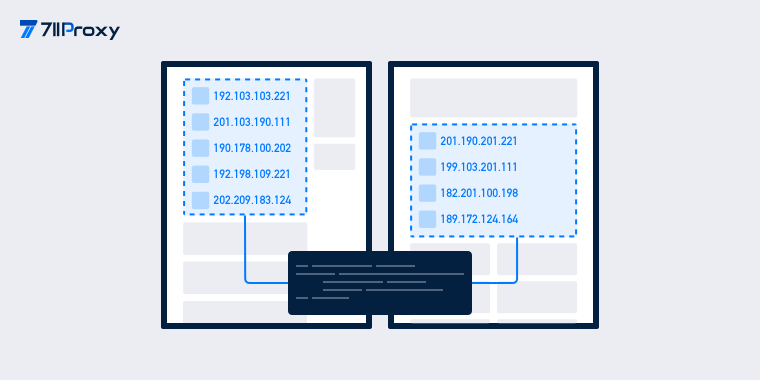
<p style="line-height: 2em;"><span style="font-size: 16px;">Run the same list of public pages through a different proxy type and three things shift at once, the samples you collect, the traffic cost you pay, and the way the setup has to be configured. The first difference between residential and datacenter proxies comes down to where the IP originates. If the pages are yours or you are authorized to collect them, these three areas are worth a pass.</span></p><p style="line-height: 2em;"><span style="font-size: 16px;"><br/></span></p><p style="line-height: 2em;"><span style="font-size: 24px;"><strong>What Each Proxy Type Is</strong></span></p><p style="line-height: 2em;"><span style="font-size: 16px;"><br/></span></p><p style="line-height: 2em;"><span style="font-size: 16px;">Residential proxy IPs are assigned by ISPs to real home broadband users, so they can be tied to a specific country and state network environment. Datacenter proxy IPs come from cloud providers and server facilities, which makes them easy to deploy and manage at scale. Both can serve compliant public data tasks. What differs is the conditions they fit.</span></p><p style="line-height: 2em;"><span style="font-size: 16px;"><br/></span></p><p style="line-height: 2em;"><span style="font-size: 24px;"><strong>Where the Differences Show Up</strong></span></p><p style="line-height: 2em;"><span style="font-size: 16px;"><br/></span></p><p style="line-height: 2em;"><strong><span style="font-size: 16px;">1. Regional page rendering.</span></strong><span style="font-size: 16px;"> When you compare prices, shipping messages, search results, or ad landing pages across markets, residential proxies return region-specific samples more reliably. Datacenter IPs tend to give a weaker picture of what local visitors actually see.</span></p><p style="line-height: 2em;"><strong><span style="font-size: 16px;">2. Match between network origin and the page. </span></strong><span style="font-size: 16px;">Some sites weigh both network origin and request frequency before they respond. Datacenter IPs carry obvious hosting characteristics, so residential proxies usually fit better when regional comparability matters.</span></p><p style="line-height: 2em;"><strong><span style="font-size: 16px;">3. Scale and management focus.</span></strong><span style="font-size: 16px;"> Datacenter proxies suit tasks with low regional requirements and fixed page structures, where they serve as a cost baseline. Residential proxies let you organize samples by region, session, and period, which fits ongoing monitoring and testing.</span></p><p style="line-height: 2em;"><span style="font-size: 16px;"><br/></span></p><p style="line-height: 2em;"><span style="font-size: 24px;"><strong>How to Decide</strong></span></p><p style="line-height: 2em;"><span style="font-size: 16px;"><br/></span></p><p style="line-height: 2em;"><span style="font-size: 16px;">1. For public information with little regional variation and clear rules, start with datacenter proxies as the cost baseline.</span></p><p style="line-height: 2em;"><span style="font-size: 16px;">2. When you need local page samples, test residential proxies first.</span></p><p style="line-height: 2em;"><span style="font-size: 16px;">3. When you need to watch one market over a long period, evaluate sticky sessions or <a href="https://www.711proxy.com/static-residential-proxies" target="_blank" style="color: rgb(0, 176, 240); text-decoration: underline;"><span style="font-size: 16px; color: rgb(0, 176, 240);"><strong>Static Residential Proxies</strong></span></a>.</span></p><p style="line-height: 2em;"><span style="font-size: 16px;">4. For high-volume projects, work out region, traffic budget, and concurrency separately.</span></p><p style="line-height: 2em;"><span style="font-size: 16px;"><br/></span></p><p style="line-height: 2em;"><strong><span style="font-size: 24px;">Why Choose 711Proxy</span></strong></p><p style="line-height: 2em;"><span style="font-size: 16px;"><br/></span></p><p style="line-height: 2em;"><strong><span style="font-size: 16px;">1. Coverage and geo settings.</span></strong><span style="font-size: 16px;"> 711Proxy holds more than 100 million residential IPs across 200+ countries and regions, with <a href="https://www.711proxy.com/global-residential-proxy-locations" target="_blank" style="color: rgb(0, 176, 240); text-decoration: underline;"><span style="font-size: 16px; color: rgb(0, 176, 240);"><strong>country and state</strong></span></a> targeting to help plan samples.</span></p><p style="line-height: 2em;"><strong><span style="font-size: 16px;">2. Match the product to the task.</span></strong><span style="font-size: 16px;"> <span style="font-size: 16px; color: rgb(0, 0, 0);"><span style="font-size: 16px;">Residential Proxies-GB</span></span> fit regional page observation, Static Residential Proxies suit longer runs that need a consistent connection, and Unlimited Proxies are worth evaluating for high-volume projects. Region and session settings for each product follow what the console currently shows.</span></p><p style="line-height: 2em;"><strong><span style="font-size: 16px;">3. Easier to verify and manage. </span></strong><span style="font-size: 16px;">Start with small request volumes and log page samples, status codes, and usage, then scale up. The product descriptions, configuration docs, and support channels on the website cover both selection and setup.</span></p><p style="line-height: 2em;"><span style="font-size: 16px;"><br/></span></p><p style="line-height: 2em;"><span style="font-size: 24px;"><strong>Summary</strong></span></p><p style="line-height: 2em;"><span style="font-size: 16px;"><br/></span></p><p style="line-height: 2em;"><span style="font-size: 16px;">For regional page observation, ongoing market monitoring, and website testing, residential proxies are usually the better fit. Start from the data goal, then match the product and configuration.</span></p><p><br/></p>













'%3e%3cg%20id='ic/首页/向上'%20transform='translate(377,%20156)%20scale(1,%20-1)%20rotate(-90)%20translate(-377,%20-156)translate(370,%20149)'%3e%3crect%20id='矩形'%20x='0'%20y='0'%20width='14'%20height='14'%3e%3c/rect%3e%3cpolyline%20id='路径'%20stroke='%23042040'%20transform='translate(7,%207.5)%20scale(1,%20-1)%20translate(-7,%20-7.5)'%20points='12%205%207%2010%202%205'%3e%3c/polyline%3e%3c/g%3e%3c/g%3e%3c/g%3e%3c/svg%3e)