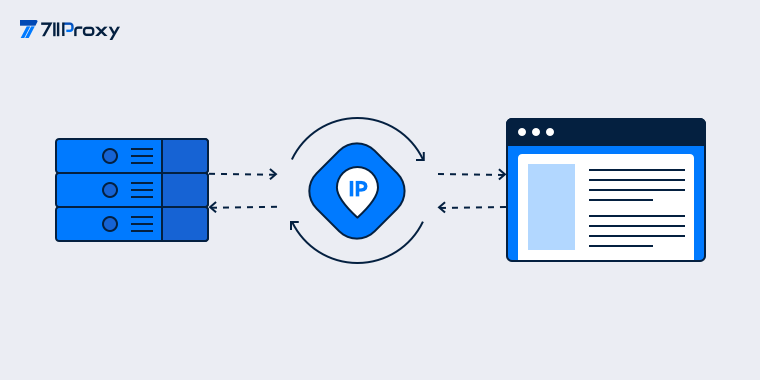
<p style="line-height: 2em;"><span style="font-size: 16px;">When a website serves multiple markets, the same product page may display different languages,
currencies, or delivery messages depending on the visitor’s region. Testing only through an office
connection can leave these differences unchecked. Residential proxies provide network exit points in
different regions, helping teams assess whether pages match the intended settings for each market. </span></p><p><br/></p><p style="line-height: 2em;"><span style="font-size: 24px;"><strong>Define Expected Results Before Changing Regions </strong></span></p><p style="line-height: 2em;"><span style="font-size: 16px;">For a website you own or are authorized to test, start by listing the target markets, pages, and expected
results. Specify which currency should appear and whether delivery should be available in each market. </span></p><p style="line-height: 2em;"><span style="font-size: 16px;">Keep the browser version, language settings, and cache handling consistent across test runs, changing
only the network exit location first. If you also need to test different browser languages, change that setting
separately. Adjusting one variable at a time makes unexpected results easier to investigate. </span></p><p><br/></p><p style="line-height: 2em;"><span style="font-size: 24px;"><strong>Language and Redirects: Are Visitors Reaching the Right Pages? </strong></span></p><p style="line-height: 2em;"><span style="font-size: 16px;">Test entry through the homepage, direct product links, and campaign landing pages. Check whether each
route leads to the expected language version and whether navigation labels and buttons use a consistent
language. </span></p><p style="line-height: 2em;"><span style="font-size: 16px;">If a visitor manually selects a region, verify that subsequent pages preserve the choice. An IP change
does not necessarily trigger a language change: the website may also consider browser settings and
previously saved preferences. </span></p><p><br/></p><p style="line-height: 2em;"><span style="font-size: 24px;"><strong>Currency and Delivery: Is the Information Consistent? </strong></span></p><p style="line-height: 2em;"><span style="font-size: 16px;">Compare currency symbols and pricing explanations across product listings, detail pages, and the
shopping cart. Check that promotional conditions are clearly stated. </span></p><p style="line-height: 2em;"><span style="font-size: 16px;">For delivery information, use approved test addresses to verify service coverage, shipping charges, and
delivery estimates. Do not infer delivery eligibility from the proxy’s exit region alone. When results differ,
compare them with the site’s business settings to distinguish intentional market differences from display
errors. </span></p><p><br/></p><h2><strong><span style="font-size: 24px;">Use Isolated Browser Profiles for Consistent Localization Testing</span></strong></h2><p style="line-height: 2em;"><span style="font-size: 16px;">Residential proxies change a website’s view of the visitor’s network location, but localization can also depend on browser language, timezone, cookies, and other profile settings. Teams can use </span><a href="https://www.morelogin.com/" target="_self"><span style="font-size: 16px; color: rgb(0, 112, 192);">MoreLogin</span></a><span style="font-size: 16px;"> to create a separate browser profile for each test market and assign the appropriate 711Proxy residential proxy to it. This keeps browser and session settings separated between regions and makes localization results easier to reproduce.</span></p><p><br/></p><p style="line-height: 2em;"><span style="font-size: 24px;"><strong>Use Residential Proxies to Support Repeatable Tests </strong></span></p><p style="line-height: 2em;"><span style="font-size: 16px;">711Proxy’s <a href="https://www.711proxy.com/use-cases/website-testing" target="_blank" style="color: rgb(0, 176, 240); text-decoration: underline;"><span style="font-size: 16px; color: rgb(0, 176, 240);">website testing solution</span></a> includes checking website experiences across regions. Its <a href="https://www.711proxy.com/residential-proxies-gb" target="_blank" style="color: rgb(0, 176, 240); text-decoration: underline;"><span style="font-size: 16px; color: rgb(0, 176, 240);">Residential
Proxies-GB</span></a> product offers geographic targeting alongside rotating and sticky session options. For
workflows spanning several pages, assess whether the session settings suit the expected test duration,
and record the exit region, time, page URL, and screenshots. </span></p><p style="line-height: 2em;"><span style="font-size: 16px;">Keep the actual result, expected result, and reproduction steps together in each issue report. After a fix,
repeat the test under the same conditions. Proxies supply the network access conditions; screenshots,
browser settings, and website logs provide the supporting evidence needed to investigate differences.</span></p>














'%3e%3cg%20id='ic/首页/向上'%20transform='translate(377,%20156)%20scale(1,%20-1)%20rotate(-90)%20translate(-377,%20-156)translate(370,%20149)'%3e%3crect%20id='矩形'%20x='0'%20y='0'%20width='14'%20height='14'%3e%3c/rect%3e%3cpolyline%20id='路径'%20stroke='%23042040'%20transform='translate(7,%207.5)%20scale(1,%20-1)%20translate(-7,%20-7.5)'%20points='12%205%207%2010%202%205'%3e%3c/polyline%3e%3c/g%3e%3c/g%3e%3c/g%3e%3c/svg%3e)