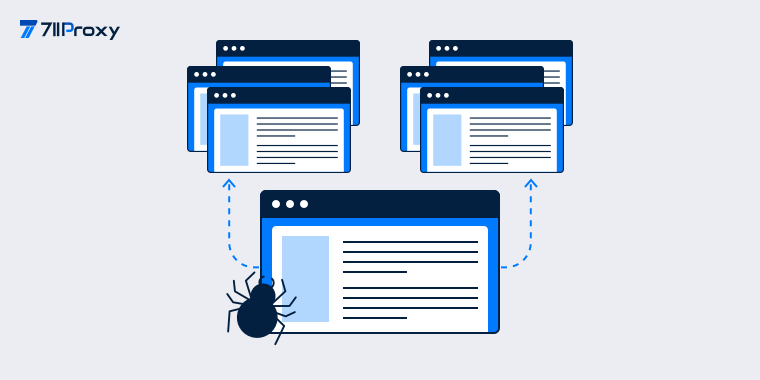
<p style="line-height: 2em;"><span style=";font-family:宋体"><span style="font-family:Calibri">Web crawlers are automated programs designed to collect and extract data from the Internet. Whether you're conducting market analysis, monitoring competitors, or crawling news and social media data, building an efficient web crawler is crucial. Here are four key tips to help you build a stable and efficient web crawler.</span></span></p><p style="line-height: 2em;"><span style=";font-family:宋体"><span style="font-family:Calibri"><br/></span></span></p><p style="line-height: 2em;"><span style="font-size: 24px;"><strong><span style="font-family: Calibri;">1. Choose the right programming language</span></strong></span></p><p style="line-height: 2em;"><span style="font-size: 24px;"><strong><span style="font-family: Calibri;"><br/></span></strong></span></p><p style="line-height: 2em;"><span style=";font-family:宋体"><span style="font-family:Calibri">Choosing the right programming language is the first step in building a web crawler. Python is widely popular because of its powerful libraries and simple syntax, especially libraries such as BeautifulSoup and Scrapy, which greatly simplify the process of parsing web pages and extracting data. These libraries are not only capable of working with HTML documents, but also data cleansing and storage.</span></span></p><p style="line-height: 2em;"><span style=";font-family:宋体"><span style="font-family:Calibri">In addition to Python, JavaScript is also suitable for crawling dynamic web pages, especially if the site relies on AJAX to load content. Using Node.js and its related frameworks, real-time data and user interactions can be handled efficiently. Depending on the complexity and specific needs of your project, choosing the most suitable programming language will provide a solid foundation for your crawler.</span></span></p><p style="line-height: 2em;"><span style=";font-family:宋体"><span style="font-family:Calibri"><br/></span></span></p><p style="line-height: 2em;"><span style="font-size: 24px;"><strong><span style="font-family: Calibri;">2. Use IP proxy</span></strong></span></p><p style="line-height: 2em;"><span style="font-size: 24px;"><strong><span style="font-family: Calibri;"><br/></span></strong></span></p><p style="line-height: 2em;"><span style=";font-family:宋体"><span style="font-family:Calibri">To avoid being blocked by the target website, using IP proxy is an effective solution. Proxy IP can hide the real IP and reduce the request frequency, thus reducing the risk of being banned. Different types of proxies can be chosen for different needs:</span></span></p><ul class=" list-paddingleft-2" style="list-style-type: disc;"><li><p style="line-height: 2em;"><span style=";font-family:宋体"><span style="font-family:Calibri">Residential proxies: Provide the real user's IP address, which is suitable for high anonymity needs and can effectively circumvent the anti-crawler mechanism of websites. Residential proxies are usually more expensive, but have the advantage of higher privacy protection and lower risk of being banned.</span></span></p></li><li><p style="line-height: 2em;"><span style=";font-family:宋体"><span style="font-family:Calibri">Data center proxies: Suitable for highly concurrent requests and less expensive, but may be more easily identified by the target website. These types of proxies usually offer fast connection speeds and are suitable for application scenarios that require high speed.</span></span></p></li></ul><p style="line-height: 2em;"><span style=";font-family:宋体"><span style="font-family:Calibri">For example, 711Proxy provides reliable proxy services to help you manage IPs effectively and ensure stable operation of the crawler. When using a proxy, it is recommended to change IPs regularly to avoid blocking caused by using the same IP for a long time. This strategy not only improves the success rate, but also maintains the continuity of data collection.</span></span></p><p style="line-height: 2em;"><span style=";font-family:宋体"><span style="font-family:Calibri"><br/></span></span></p><p style="line-height: 2em;"><span style="font-size: 24px;"><strong><span style="font-family: Calibri;">3. Control request frequency</span></strong></span></p><p style="line-height: 2em;"><span style="font-size: 24px;"><strong><span style="font-family: Calibri;"><br/></span></strong></span></p><p style="line-height: 2em;"><span style=";font-family:宋体"><span style="font-family:Calibri">Controlling the request frequency is a crucial part of the crawling process. Frequent requests may lead to the target website's resentment, which may lead to IP blocking. Therefore, it is recommended when crawling data:</span></span></p><ul class=" list-paddingleft-2" style="list-style-type: disc;"><li><p style="line-height: 2em;"><span style=";font-family:宋体"><span style="font-family:Calibri">Setting a suitable delay: A random delay can be used to simulate the behavior of a human user, usually between 1-5 seconds is recommended. This reduces the frequency of requests and the risk of being recognized as a crawler.</span></span></p></li><li><p style="line-height: 2em;"><span style=";font-family:宋体"><span style="font-family:Calibri">Use a request queue: Manage the order and timing of requests sent through a queue to ensure that requests are made at reasonable intervals. You can use message queuing tools such as RabbitMQ to handle concurrent requests to effectively manage the load of data crawling.</span></span></p></li></ul><p style="line-height: 2em;"><span style=";font-family:宋体"><span style="font-family:Calibri">By reasonably controlling the frequency of requests, you can maintain good interaction with the target website and reduce the risk of being recognized as a crawler. At the same time, consider using a proxy pool to dynamically assign different proxy IPs when needed to further reduce the pressure of requests to a single IP.</span></span></p><p style="line-height: 2em;"><span style=";font-family:宋体"><span style="font-family:Calibri"><br/></span></span></p><p style="line-height: 2em;"><span style="font-size: 24px;"><strong><span style="font-family: Calibri;">4. Handling anti-crawler mechanisms</span></strong></span></p><p style="line-height: 2em;"><span style="font-size: 24px;"><strong><span style="font-family: Calibri;"><br/></span></strong></span></p><p style="line-height: 2em;"><span style=";font-family:宋体"><span style="font-family:Calibri">Many websites implement anti-crawler mechanisms such as captchas, IP blocking and JavaScript validation. To overcome these obstacles, the following measures can be taken:</span></span></p><ul class=" list-paddingleft-2" style="list-style-type: disc;"><li><p style="line-height: 2em;"><span style=";font-family:宋体"><span style="font-family:Calibri">Simulate real user behavior: Use browser automation tools (e.g. Selenium) to simulate user actions, maintain session stability, and handle dynamically loaded content. This approach is particularly suitable for websites that require complex interactions.</span></span></p></li><li><p style="line-height: 2em;"><span style=";font-family:宋体"><span style="font-family:Calibri">Use distributed crawlers: Distribute crawling tasks to multiple nodes to spread out the request pressure and improve crawling efficiency while reducing the load on a single IP. By using a distributed system, you can collect large-scale data faster and improve its accuracy.</span></span></p></li><li><p style="line-height: 2em;"><span style=";font-family:宋体"><span style="font-family:Calibri">Parsing and resolving captchas: Use third-party services or manual identification to handle captchas and ensure smooth data capture. For complex captchas, consider using image recognition technology to automate the process.</span></span></p></li></ul><p style="line-height: 2em;"><span style=";font-family:宋体"><span style="font-family:Calibri"><br/></span></span></p><p style="line-height: 2em;"><span style=";font-family:宋体"><span style="font-family:Calibri">After mastering the above four tips, you will be able to build web crawlers more efficiently. Whether it's market analysis, competitor research or content monitoring, a proper crawling strategy will provide powerful data support for your business. We hope these tips will help you successfully achieve your goals, collect valuable data and drive business growth.</span></span></p><p><br/></p>














'%3e%3cg%20id='ic/首页/向上'%20transform='translate(377,%20156)%20scale(1,%20-1)%20rotate(-90)%20translate(-377,%20-156)translate(370,%20149)'%3e%3crect%20id='矩形'%20x='0'%20y='0'%20width='14'%20height='14'%3e%3c/rect%3e%3cpolyline%20id='路径'%20stroke='%23042040'%20transform='translate(7,%207.5)%20scale(1,%20-1)%20translate(-7,%20-7.5)'%20points='12%205%207%2010%202%205'%3e%3c/polyline%3e%3c/g%3e%3c/g%3e%3c/g%3e%3c/svg%3e)